Sustainable Wool in the Catskills
Category
Photojournalism
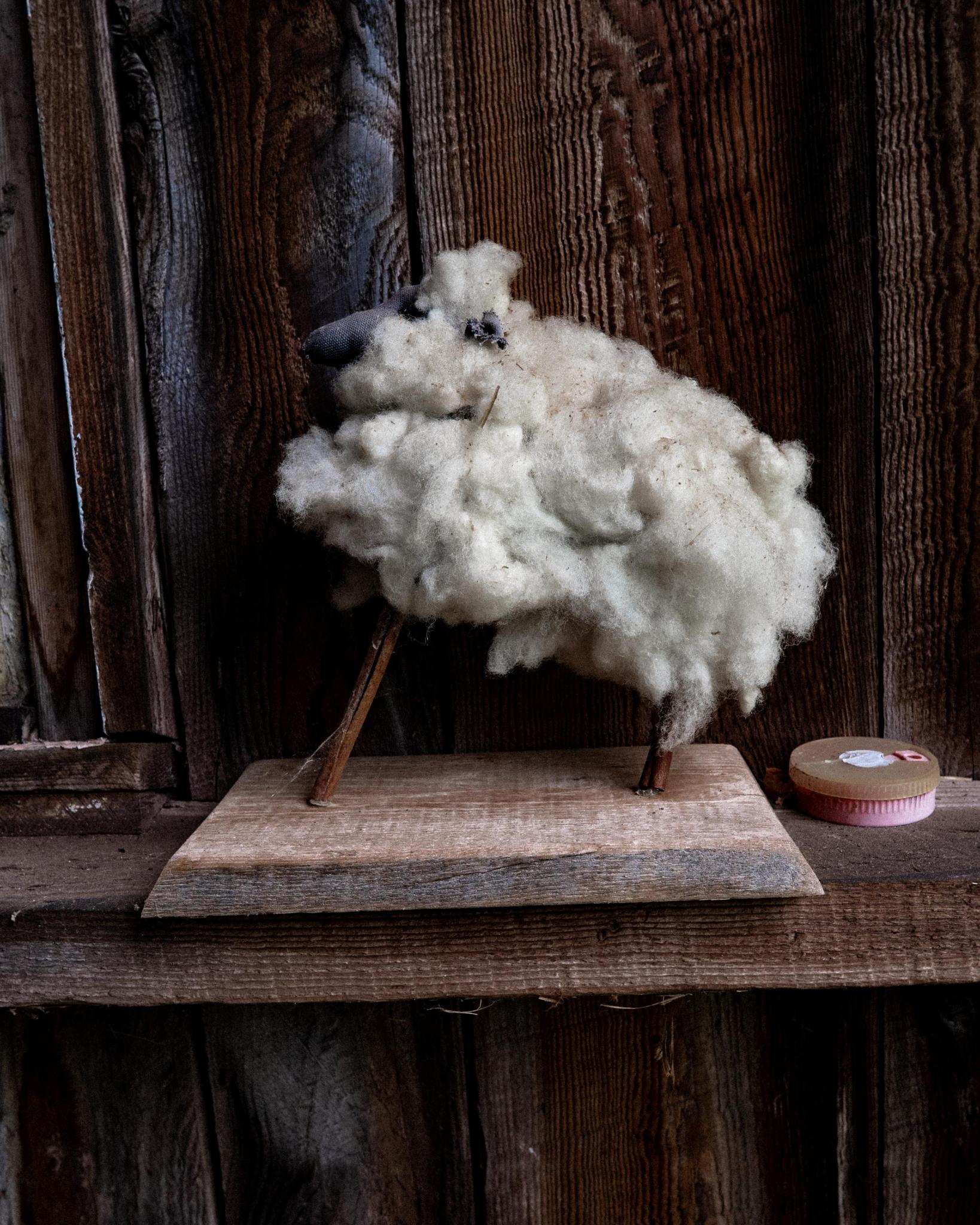
It’s said that it takes a village to do most things. Unfortunately, we live in a time where it takes a corporation. Where villages once fed, clothed, housed, and otherwise cared for one another, corporations have displaced communities, disrupted natural systems, and made it nearly impossible to access even the most basic necessities from our own backyards.


In the Catskills, however, there’s a resilient and deeply rooted community of wool producers and workers who have stretched their village across mountains, connecting neighbors through a shared commitment to keeping one another fed, clothed, and warm.
Jess Ludwicki is a textile artist in Hamden, New York, who has dedicated her practice to finding new ways to utilize locally sourced fleece from sustainable sheep farms to beautify the world—and it takes a village.
A sheep farmer herself, Jess works directly with regional farms to source fleeces that become everything from wearable art to felted acoustic panels that soften sound while insulating the spaces they inhabit, to richly textured wall pieces.
At the center of her work is a commitment to farm-to-fiber materials, collaborating with farms that prioritize regenerative grazing, whole-animal utilization, and a balanced relationship between the land and the flock.
Whether she’s working with her own wool or fleece from neighboring farms, the process begins the same way. A raw fleece is laid out to reveal its natural colour, texture, and character. It is carefully cleaned of remaining debris before being wet felted onto a fleece backing, then patiently shaped and worked into flowing forms and layered textures that celebrate the material rather than disguise it.
Deep in the hills of Preston Hollow, New York, sits Heather Ridge Farm, a dairy farm more than two centuries old that has changed hands only twice in its history. Today, it has found new life as a sheep farm under the stewardship of Carol Clement and John Harrison.
Carol oversees the flock and the land, managing a mixed breed of sheep through a Voisin grazing system designed to regenerate both pasture and soil.
By rotationally grazing the flock, the farm prevents overgrazing and gives grasses time to recover without damaging their root systems. The result is healthier pasture, improved water retention and filtration, increased organic matter in the soil, and ultimately healthier animals nourished by healthier land.
On weekends, Carol and John open the farm as a café for the local community, serving regional produce, meat, and goods connected to their flock. It’s a system built around reducing waste at every opportunity.
Every part of the sheep has a purpose. Meat feeds the community, sheepskins are tanned, and the fleece is distributed in several directions to ensure as little as possible goes unused. Much of the fiber is spun into socks and other everyday wearables sold through the café, while premium fleeces are sought after by artists and artisans like Jess, whose work depends on thoughtful, local fiber.

Just up the road is Greene County Wool, stewarded by Cydney Cornell. Sharing Carol's commitment to Voisin grazing, Cydney has spent the past decade restoring land that was once little more than moss and depleted soil into thriving pasture capable of supporting both healthy sheep and a healthier ecosystem.
Through her work, Cydney has become deeply embedded within the region's sustainable wool community, supplying fleece to artisans and manufacturers seeking low-waste, locally produced fiber. A no-kill farmer, she keeps her flock throughout their entire lives, seeing them not simply as producers of wool but as companions in a deeply restorative practice. The rhythms of grazing, grooming, and seasonal shearing have become as therapeutic as they are practical.
From flock to fiber, it takes a village.
Artists like Jess create a lasting demand for the fleeces produced by farms throughout the Catskills, helping sustain the people who care for sheep season after season. In return, those farms provide a steady stream of local fiber that Jess transforms into pieces that warm homes, soften spaces, and reconnect people to the landscapes that produced them.
It is a circular relationship built on care rather than extraction—one that reminds us that while corporations may have replaced many of our villages, they haven't replaced all of them.


